
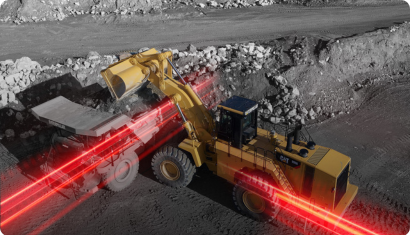
From eliminating thermal lancing to transforming workshop practices, Geographe’s Colleted Pin Assembly is challenging conventional maintenance methods across Caterpillar, Komatsu and Liebherr mining fleets.
In an industry where every hour of equipment availability matters and safety remains paramount, why are mining operations still relying on maintenance practices that expose personnel to unnecessary risks?
For decades, the removal and replacement of heavy-equipment pins have presented mining maintenance teams with a familiar set of challenges. Seized pins, extensive manual handling, thermal lancing, additional labour requirements and prolonged maintenance activities have often been accepted as part of doing business, but what if they didn’t have to be?
At Geographe, this question has driven the development and continued evolution of our Colleted Pin Assembly (CPA) in partnership with Rio Tinto Iron Ore Division. From a concept that evolved from usage in aviation, it was adapted and designed to challenge traditional OEM pin arrangements. Geographe’s CPAs offer mining operations an alternative approach to critical pin maintenance, with a focus on eliminating thermal lancing, simplifying installation and removal, and improving workshop safety.
What began at Geographe as an engineering initiative in the 1980's on underground drill rigs, the concept has since developed into something much bigger: a shift in how mining operations approach maintenance, engage their workforce and think about established practices.
Engineering a Safer Alternative
One of the most significant challenges associated with conventional rear-strut pin changeouts is the reliance on thermal lancing to remove seized OEM pins.
While widely used across mining operations, thermal lancing introduces additional hazards and complexities into an already demanding maintenance activity. Hot work exposure, permit requirements, manual handling risks and the need for additional personnel all contribute to the overall complexity of the task, along with the risk of cascading effects that can include line boring.
Geographe’s CPAs for the rear struts on haul trucks were developed to address these challenges at their source. Through an innovative tapered design and minimal bore contact, the CPA is designed to prevent pin seizure, while its colleted arrangement simplifies future removal.
More importantly, the solution eliminates the requirement for thermal lancing during CPA changeouts.
This has implications beyond the component itself. By removing the need for thermal lancing, maintenance teams can reduce exposure to associated hot-work hazards and the additional controls, support personnel and coordination traditionally required for the activity. Combined with Geographe’s purpose-designed installation and removal tooling for certain haul truck types, the CPA provides a more controlled and repeatable maintenance process.
The benefits extend across three important areas:
- Safety: Reduced exposure to thermal lancing, pinch-point hazards and difficult manual handling activities.
- Efficiency: Simplified installation and removal, supported by dedicated tooling and repeatable procedures.
- Reliability: A design intended to prevent pin seizure, helping reduce complications during subsequent maintenance activities.
However, developing a better engineering solution is only half the challenge. Getting mining operations to embrace a different way of working is where the real transformation begins.
From Product Adoption to Changing Maintenance Culture
Introducing a new maintenance solution into an established mining operation is rarely straightforward.
Workshop practices are often deeply embedded, with multiple stakeholders involved in approving, planning and executing maintenance activities. Engineers, supervisors, fitters, boilermakers, line borers and contractors all have different responsibilities and perspectives. A product may demonstrate its advantages on paper, but unless the people responsible for installing and maintaining it understand its value, meaningful adoption can be difficult.
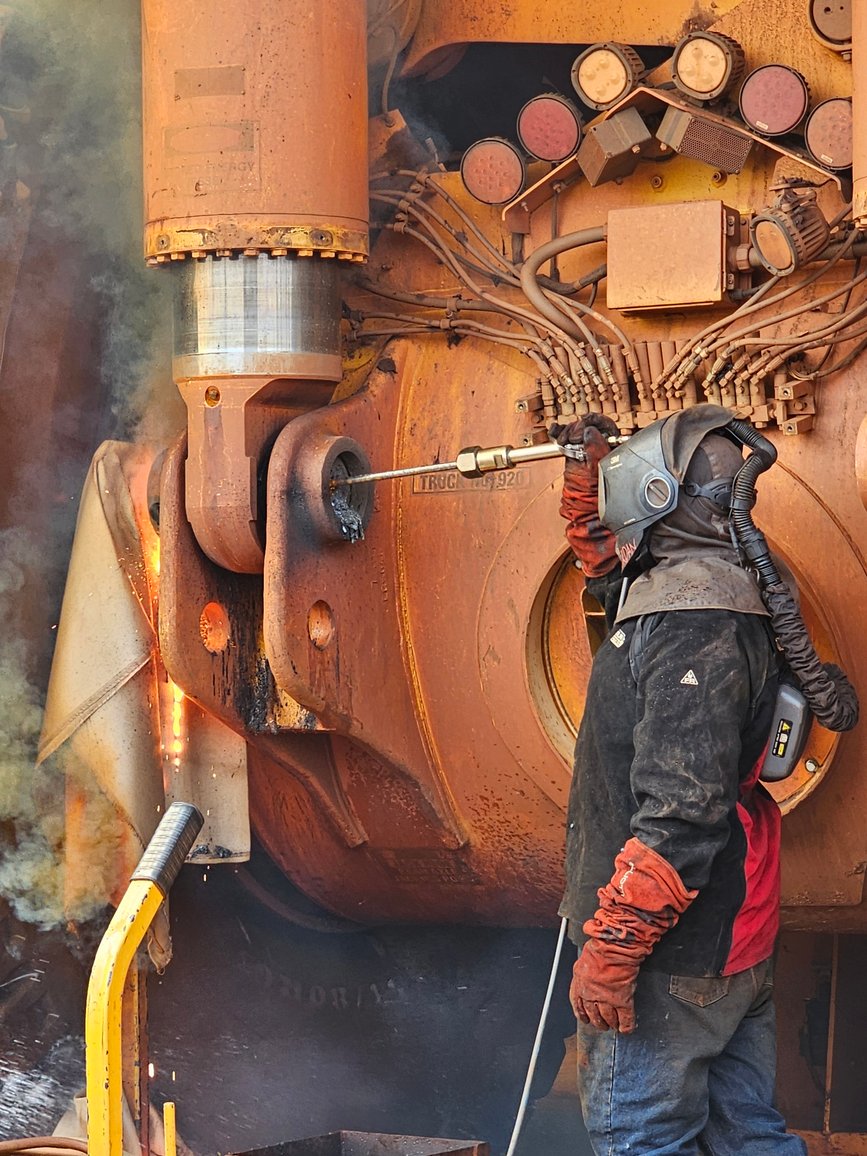
Geographe recognised early that successful CPA implementation required more than simply supplying components to site. It required a collaborative approach involving practical installation support, workforce training, stakeholder engagement and continuous feedback. This became particularly evident throughout Geographe’s engagement with Rio Tinto’s Pilbara operations.
Rio Tinto: Turning Engineering Innovation into Site-Level Adoption
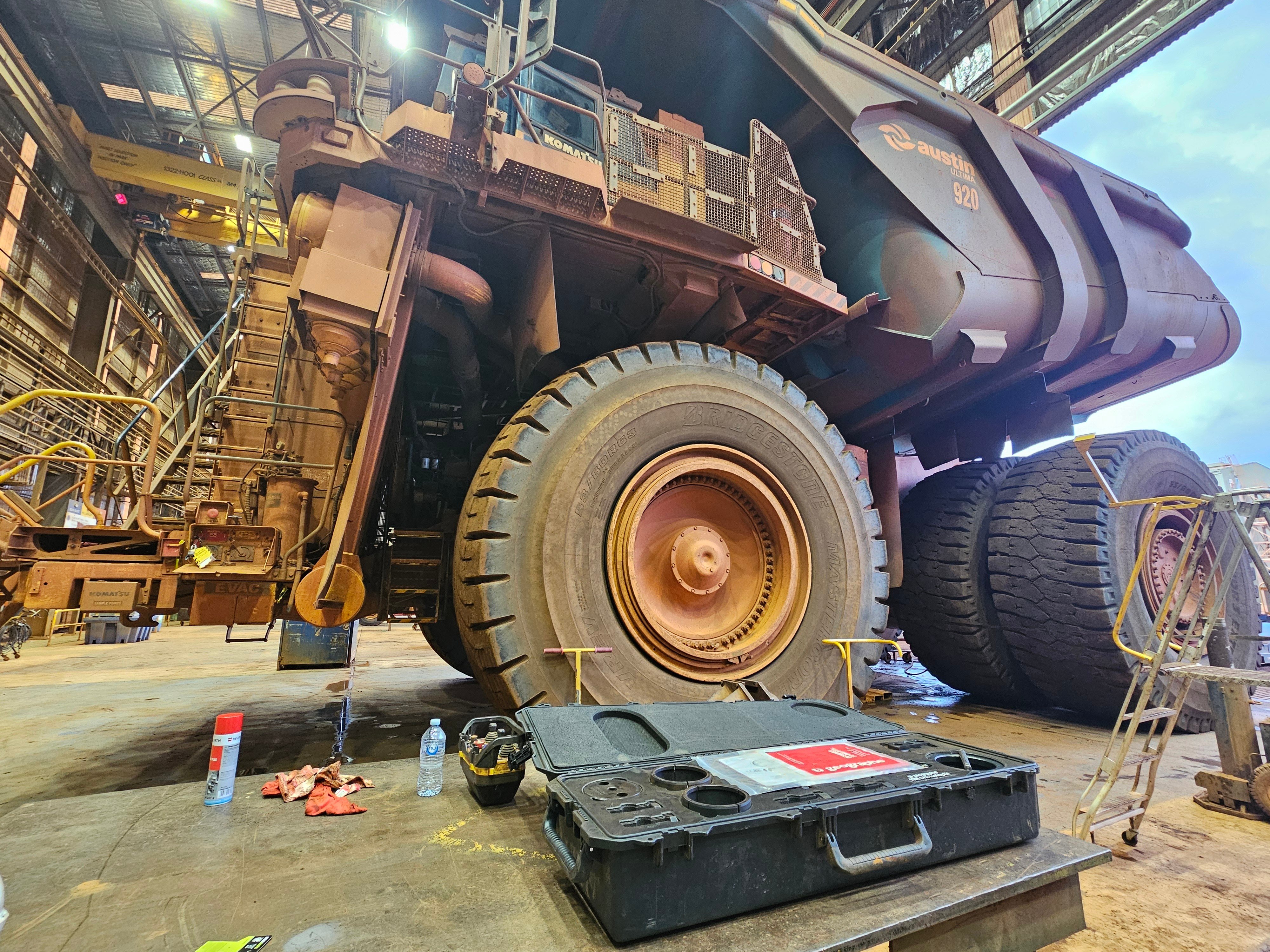
Geographe’s CPA journey with Rio Tinto commenced in 2021, with the introduction of the first Komatsu 830E haul truck equipped with Geographe’s rear-strut CPA solution.
The initial trial demonstrated the potential of the product, particularly in eliminating thermal lancing from the rear-strut changeout process. Since then, the relationship has evolved into a broader collaboration focused on improving installation practices, developing site capability and supporting the progressive adoption of CPAs. The journey, however, was not without its challenges.
Navigating multiple stakeholders, overcoming established practices and addressing initial resistance required persistence and consistent engagement at site level. Rather than simply attending installations and overseeing the work, Geographe worked alongside maintenance teams to understand their challenges, share technical knowledge and develop confidence in the new installation process. This approach eventually delivered a significant milestone at West Angelas – RTIO for the Komatsu program, while Marandoo and Gudai-Darri successfully championed the CAT implementations.
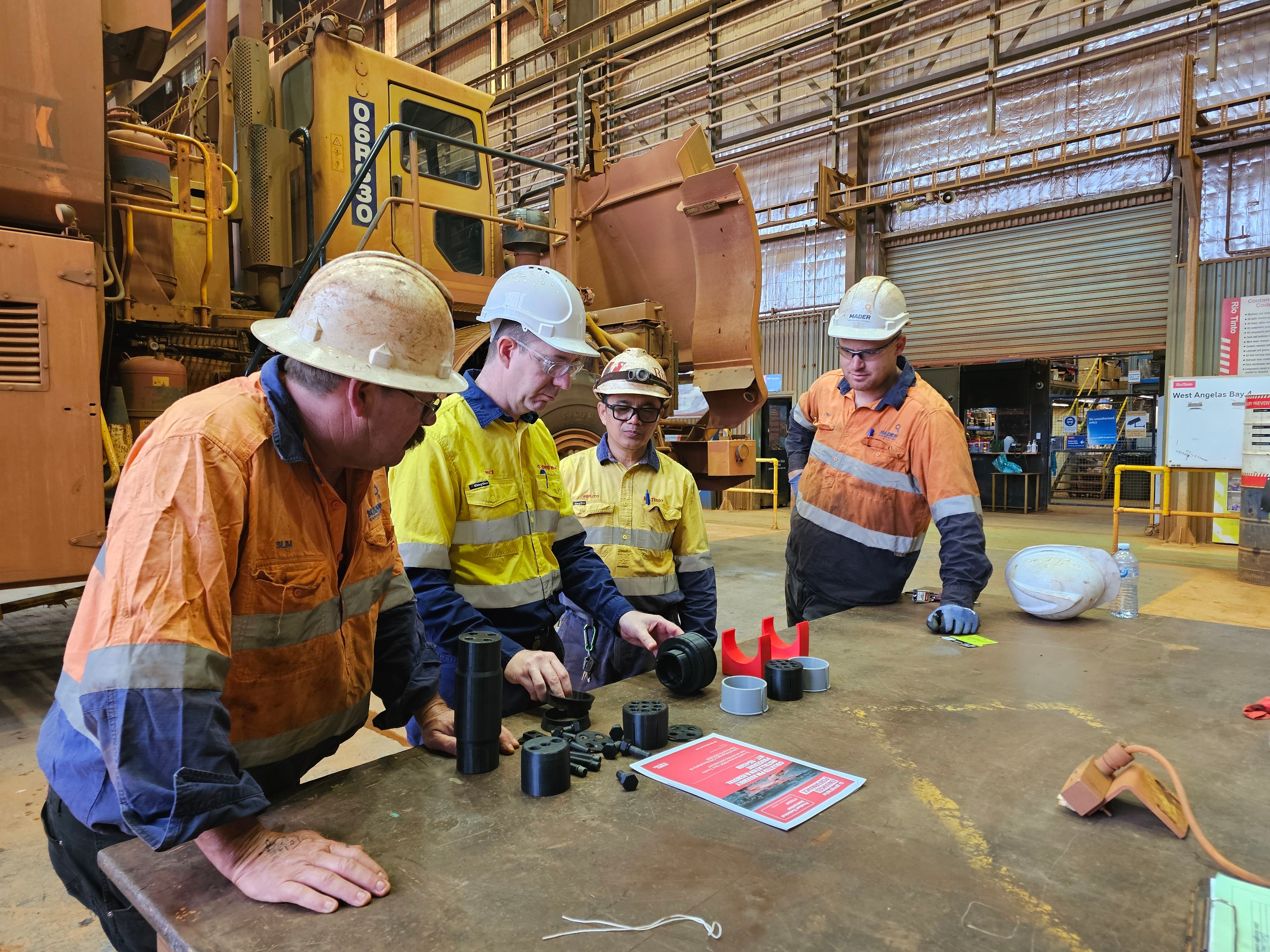
All four fitter panels responsible for the Komatsu 930E fleet were successfully trained in CPA installation, achieving a 100% successful training outcome.
This was achieved over approximately six installations, with each implementation providing an opportunity to refine the process, address challenges and improve workforce familiarity. The results extended beyond the successful installation of the product.
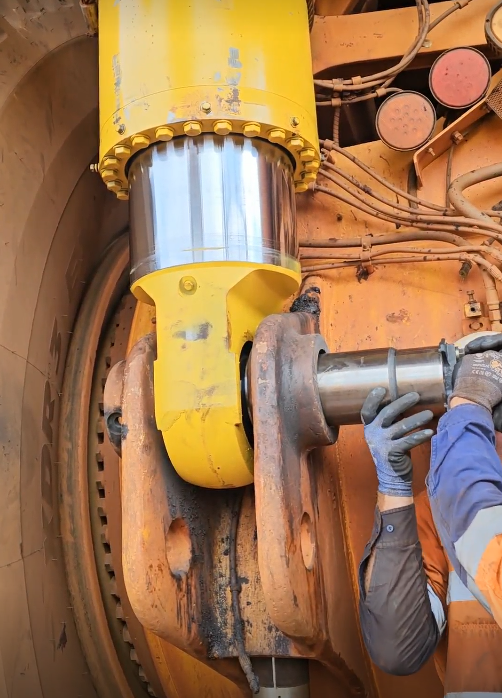
Previously resistant stakeholders became advocates. Fitters developed greater confidence in the installation procedure. Engineers and planners gained a better understanding of the requirements, allowing more appropriate timelines to be incorporated into work orders. Workshop preparation also improved considerably. Following one installation, Rio Tinto’s wider team specifically acknowledged the quality of the workshop setup and requested that installation photographs be documented and included in work-order documentation to help standardise execution for fitters across the site. For Geographe, this represented an important achievement.
The objective was to help develop the capability for site personnel to perform the activity independently, confidently and consistently, rather than simply complete an installation.
When Real-World Results Speak for Themselves
Perhaps the strongest endorsement of any engineering solution comes from the people who work with it every day.
During one West Angelas installation, the maintenance team encountered significant scheduling challenges, with delays to asset preparation and thermal lancing reducing the available time for subsequent line boring. Following the completion of lancing, three of the four bores required line boring. With only one night shift available, the line-boring team initially expressed concerns about completing the work within the allocated timeframe.
Through practical guidance, previous installation experience and collaboration with the line borer, the team successfully completed the required machining. The fitters were subsequently taken through the installation procedure using Geographe’s 3D model, with practical dry runs and a detailed review of the installation process. The outcome was particularly encouraging.
Following installation, the fitters expressed their satisfaction with the process, describing the implementation as seamless. One fitter specifically highlighted the importance of the CPA in addressing the elimination component of the safety hierarchy, recognising its contribution towards creating a safer workshop environment.
On another installation, the team successfully completed the installation and final torquing of all four pins following line boring within approximately eight hours. This timeframe covers fitment only, including strut alignment with the clevis and pin installation; it does not include line boring.
The installation crew also acknowledged the benefits of Geographe’s guide sleeves, highlighting how they assisted with the alignment and installation process. These experiences demonstrate an important principle: engineering innovation delivers its greatest value when it is supported by the people responsible for putting it into practice.
Beyond Rear Struts: Identifying the Next Generation of Opportunities
An unexpected benefit of Geographe’s site engagement has been the identification of further opportunities to apply CPAs (Colleted Pin Assemblies) across other mining equipment. Through conversations with boilermakers and maintenance personnel, additional applications have emerged where conventional pin removal methods continue to present challenges.
Dozer Equaliser Bar Pins – D10T and D11T
Workshop personnel highlighted recurring challenges associated with seized equaliser bar pins. Given their proximity to the sump, even a minor error during thermal lancing can potentially result in significant asset damage. A CPA solution could provide an opportunity to simplify this maintenance activity while reducing associated risks.
Blade Cylinder Tilt Pins
Boilermakers also identified blade cylinder tilt pins as particularly difficult to remove using conventional thermal lancing methods. This presents another potential development opportunity for Geographe to investigate.
Importantly, these discussions are not isolated to one operation. Similar challenges have also been identified through engagement with other mining operators.
They reinforce the broader opportunity to examine traditional pin arrangements and identify where alternative engineering solutions could improve safety, reliability and maintenance efficiency.
The Momentum Is Building: From Rio Tinto to Fortescue and Beyond
The growing adoption of Geographe’s CPA is no longer limited to its established relationship with Rio Tinto.
Fortescue Metals Group (FMG) is currently trialling Geographe’s Komatsu 930E rear-strut CPAs, representing another important milestone in demonstrating the product across major Australian mining operations. There is also emerging interest from the Eastern Australian market for their operations reflecting an important shift in the industry.
Mining operators are increasingly recognising the value of solutions that do more than replace an existing component. They are looking for opportunities to eliminate hazardous activities, simplify maintenance procedures and improve the way work is executed at site level.
Geographe’s CPA addresses these challenges through an engineered solution supported by dedicated tooling, installation procedures and practical site assistance.
With applications across Caterpillar and Komatsu equipment, the opportunity extends across a significant portion of the mining haul truck market.
More Than a Component. A Different Way of Thinking.
The mining industry has never stood still. Equipment evolves, technology and products advance, and operational expectations continue to increase, yet some maintenance practices have remained largely unchanged.
Geographe believes that challenging these established practices is essential to building safer and more productive mining operations.
The success of its CPA demonstrates what can be achieved when engineering innovation is combined with collaboration, practical experience and a genuine commitment to improving the way maintenance is performed.
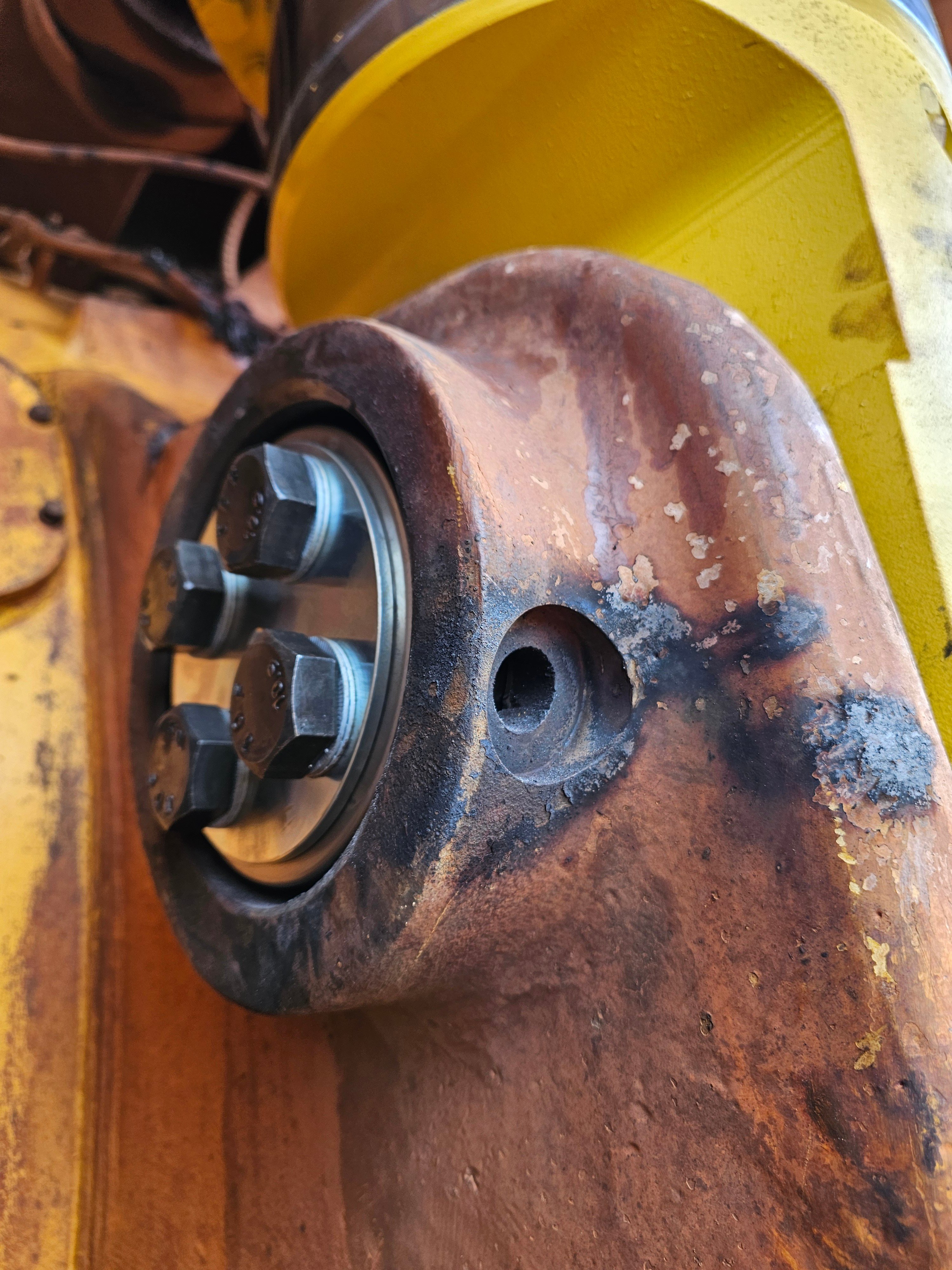
From the initial Rio Tinto trial to the successful training of fitter panels across West Angelas, and now the growing interest from other major mining operators, the journey reflects more than product development, it represents a change in mindset. One where hazardous maintenance activities can be challenged rather than accepted, where workshop teams are empowered through better engineering and training, and where operational efficiency and safety are considered together rather than in isolation.
The future of mining maintenance shouldn’t be about finding better ways to manage existing risks. It should be about engineering solutions that eliminate them.


How can we help?
Submit your details below and our team will contact you.